




You ask for security testing and get two quotes: an automated scan for a few hundred bucks, and a penetration test for a few THOUSAND bucks. At first glance, the automated scan feels like a bargain to the untrained ear: it runs in one day and I get a full report?! However, the reality is it cannot find the most common flaw in software — Broken Access Control, ranked the #1 application risk and present in 100% of the apps OWASP tested. If something serious shows up in your automated scan, you likely missed many other vulnerabilities that a penetration test would find.

The automated scan
An automated scan is fast and cheap. It works 100% of the time and is genuinely good at what it does: known CVEs, missing patches, expired certificates, the obvious misconfiguration.
It will help you find if your system has some obvious misconfiguration or known exploit that attackers could use to get in.
If it's your first time running an automated scan, it will probably find a few serious issues and you will feel good when you fix them: "Aaah... Now I can rest in peace: I patched all the holes!".
You took the right first step, but you failed to go through the door. The scanner is just a door and it's very shallow by nature. If it does come up with serious findings, it is an urgent sign that you need to dive deeper. Fixing the vulnerabilities surfaced by the scanner won't make your website "secure".
Go deeper
There are things that a traditional scanner simply doesn't have the capability to check. The scanner doesn't understand your system, it doesn't know what is normal behavior versus weird behavior. It's built to work on any application and is completely agnostic to your specific technology stack.
For instance, a traditional scanner will verify whether a request works. It will NOT verify whether something should have been allowed based on your internal program logic.
"Should this user be able to open this invoice, change this price, reach this admin page?" - These are all questions related to Access Control. When a client of the system is able to perform actions they shouldn't, that's what we call Broken Access Control. This is the #1 application vulnerability in web apps, precisely because it is a logic decision which is harder to catch. The scanning tool sees an HTTP 200 and records SUCCESS. It has no idea the user who just loaded order #1002 was only ever supposed to see order #1001.
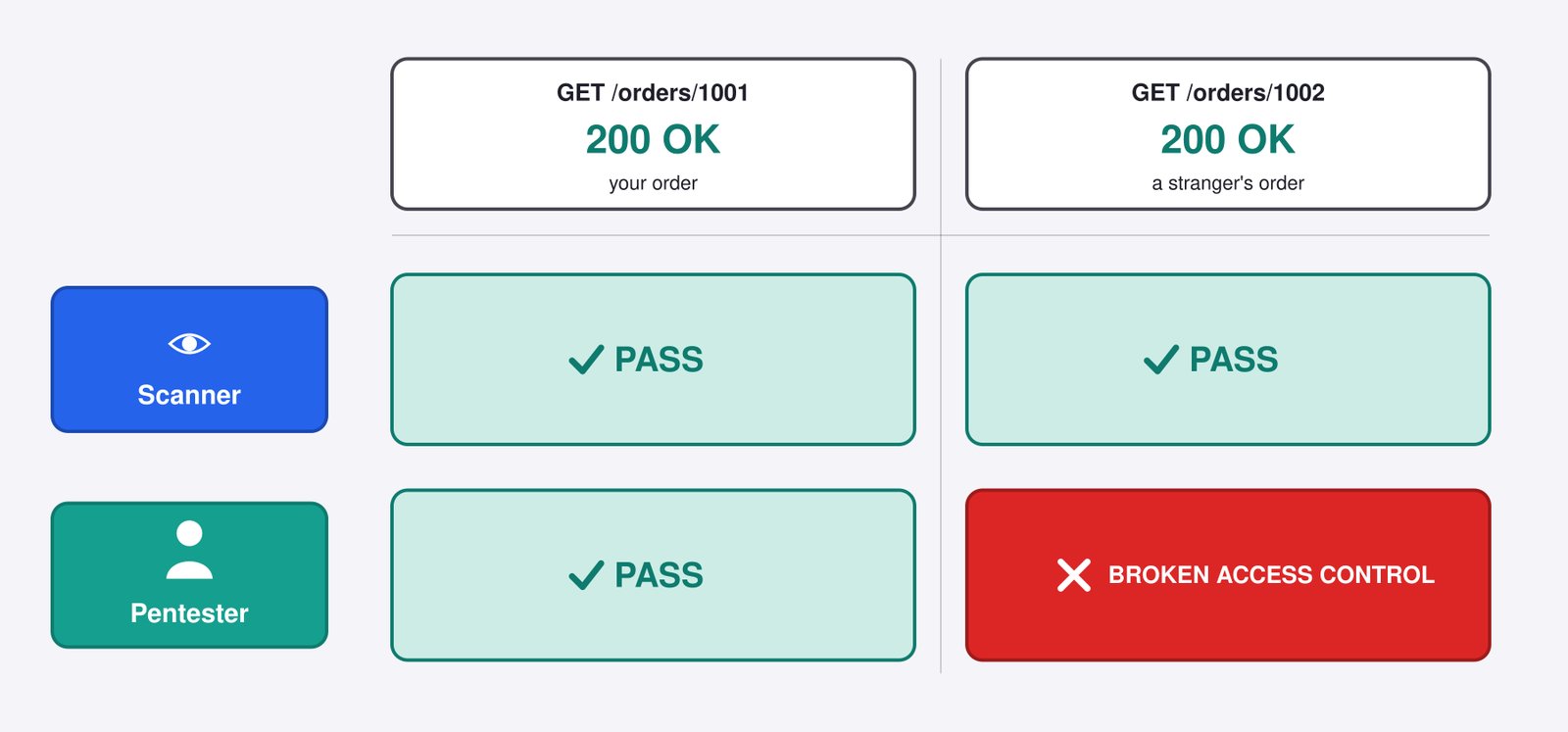
Now granted, recently more and more advanced automated scanners have been coming out with capabilities to detect this sort of vulnerability, but the price tag on those is sometimes higher than a pentest.
Beyond just finding a logic mismatch, however, hiring an expert gives you value a tool never could.
A human tests with a goal
A real attacker is not running a checklist. They have an objective, and they chain whatever they find to reach it — a small information leak here, a weak default there. They gather small breadcrumbs that eventually lead up to your customer database. It takes understanding your business, your processes and your system to do that.
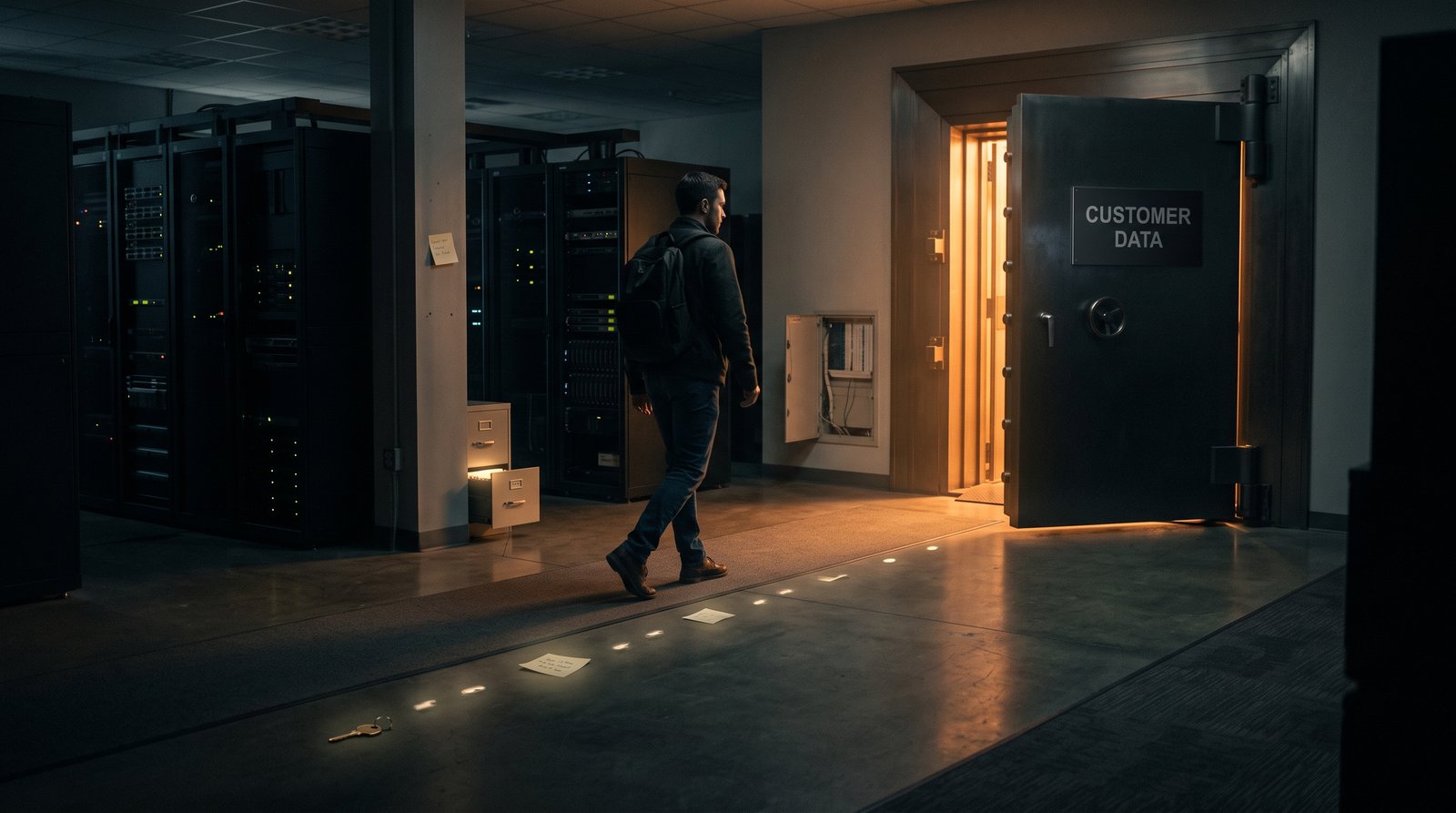
Moreover, a penetration tester is an actual person: they will ask you a million questions you would never have thought to ask about your system. They will poke at every single hole, even the ones you never thought of running a tool against. Good engagements are a conversation: your engineers watch how the tester got in, ask why the fix actually holds, and start asking "how would someone break this?" about the next feature before they ship it.
While a scan helps you patch holes, the back-and-forth with a red-teamer fundamentally changes how your team builds stuff.
In a nutshell, a scanner just inventories what is broken. A pentester does much more:
- Finds systems you didn't even know existed.
- Finds complex business-logic issues.
- Trains your team to build secure software.
- Helps you evolve toward more mature processes.
Tired of getting a "security report" and then finding out you had another breach? Partner with Panke
References
- OWASP Top 10:2025 — A01 Broken Access Control

 Instagram