


If you've ever registered an app on the App Store, you probably encountered the "D-U-N-S number". For many, the first time they hear about this number is when registering on one of Apple or Google's enterprise services. In this blog, we will dive into what Dun & Bradstreet is, what it means for you if you are a non-US entity, and what you should watch out for when requesting a D-U-N-S number for the first time.
Mandatory for a company, but optional for some
Apple is explicit: "Companies and educational institutions must provide a D-U-N-S Number". However, it's not mandatory for everyone: government organizations and individuals are not required to provide one.
Google Play draws the same line: organization accounts require the number, personal accounts do not.
The gate fires when you pick Organization. That is, if you register as an Organization, you must provide the number to proceed down their verification funnel.
The number is free. What do they gain from it?
Dun & Bradstreet states there is "no cost to request and receive a D-U-N-S Number".
What it costs is eight facts: legal name, business address, business phone, the name of the owner, president or CEO, legal structure, year created, primary industry, and total full- and part-time employees.
They trade the effort they need to put into their verification service for your data. The service is free because they have a much better way to make money using that data.
This is a credit file, and it gets scored
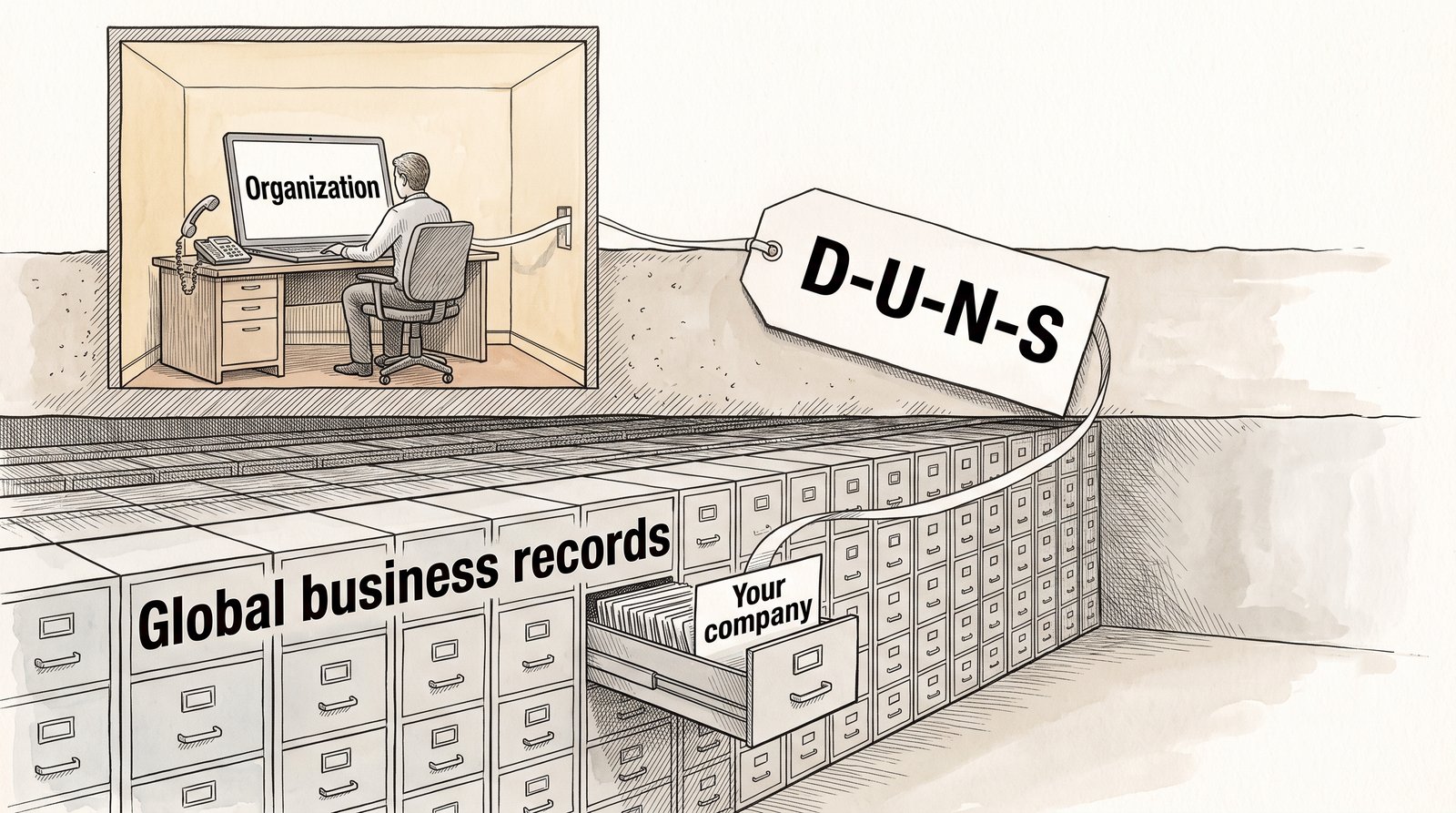
D&B is direct about what the number does: it "links to your Dun & Bradstreet business credit file". They maintain a database of over 600 million businesses worldwide.
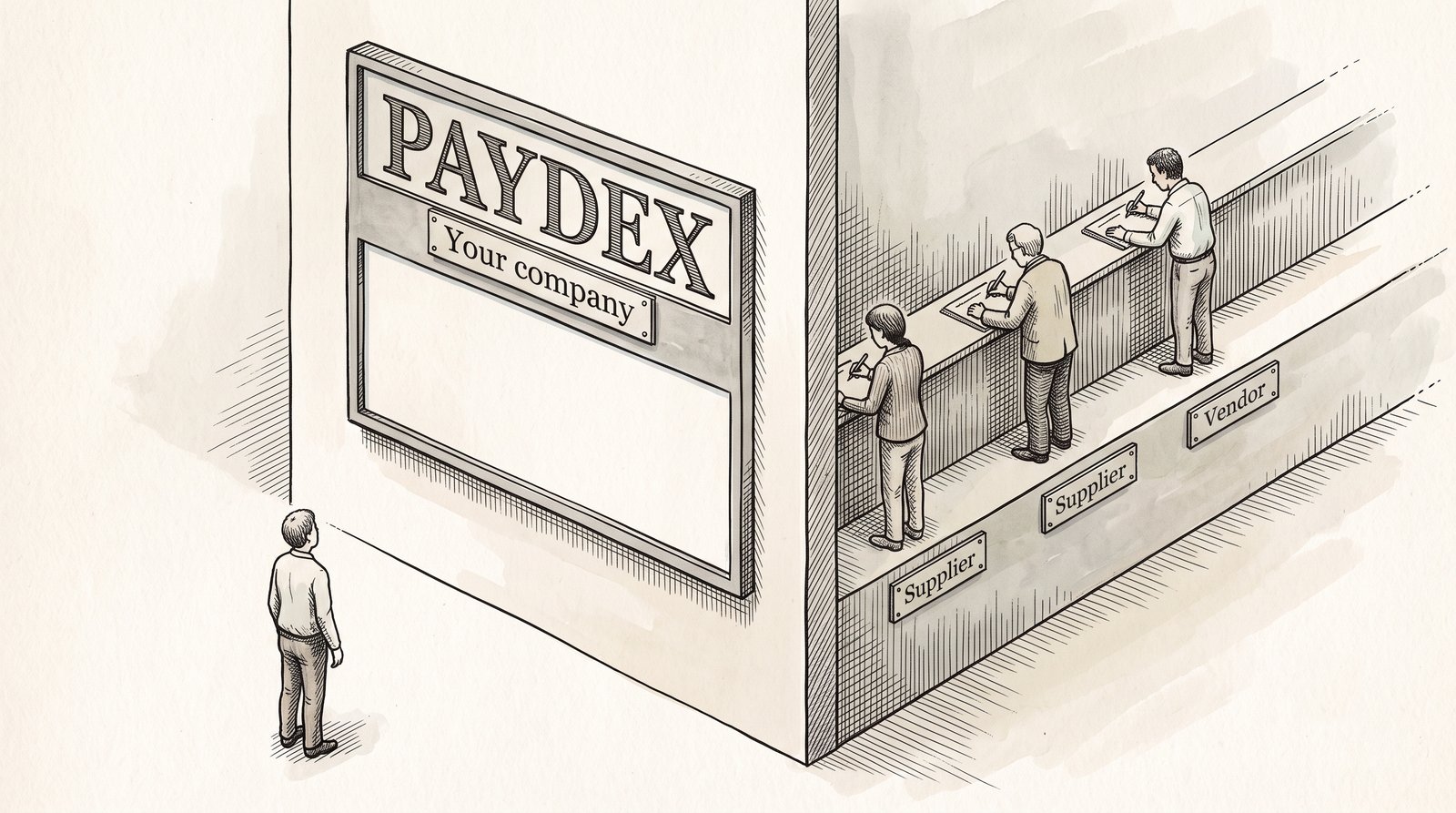
A record in that database can carry a PAYDEX score between 1 and 100. D&B calculates it from "records of payment experiences submitted to Dun & Bradstreet by suppliers and vendors".
These "payment experience records" are submitted by your suppliers. It works much like a personal credit bureau such as Equifax: your score is dictated by what other entities say about you. The only way to improve your score is to have more people submit good experience records about you: that's D&B's official tip.
What happens after you register
After you apply for the number, your records are kept permanently in D&B's database. Other businesses can use it to "explore partnerships, approve credit, make contracting decisions."
Those businesses do not have to ask for your authorization to query this database. D&B publishes company profiles in a directory that search engines crawl and index, naming the company, its city, its industry classification, and a Key Principal — which is to say, a person.
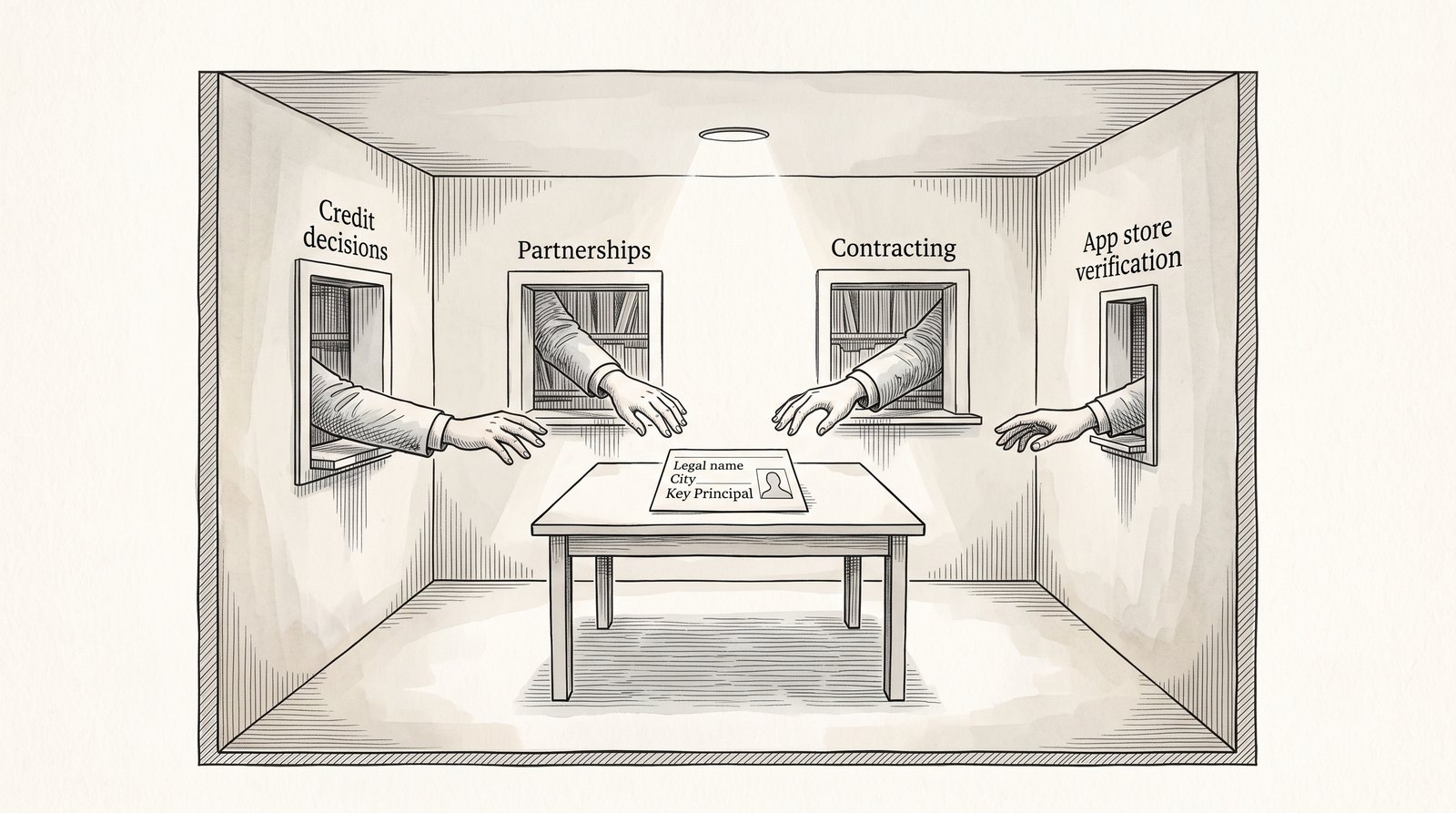
Then there is Google, which treats what D&B holds as authoritative over your own Play Console. Let your legal name or address drift out of sync and you will get a notification: "Your organization name or address is no longer verified". Miss the deadline, and the account enters a restricted state, which according to Google's own help, "would remove all of your apps from Google Play."
Let that sink in. A third party's database entry is a live dependency for your product being on the store at all. Google's July 2023 policy grounds verification in preventing malware and fraud and helping "users understand who's behind the apps they're installing."
The App Store and Google Play are not the only places the number turns up. It is how several large platforms verify that a company is a company:
- Microsoft Partner Center and Microsoft Store company accounts. Microsoft takes either a D-U-N-S number or uploaded business documents, and names the number as the faster route. Partners who supplied neither by 17 February 2025 were blocked from editing their apps.
- Google Ads. Google asks for it when you apply for monthly invoicing or go through advertiser verification. It says the number "is not required for either process, but it may help our teams assess your applications faster."
Do this BEFORE you file
- Lock in the registered address at incorporation. Your company registration fixes the registered office. If the registered address is where you live, publishing it creates a privacy issue.
- If you change your registered address, request an update with D&B. Changing your address can be a headache, but if anything, make sure the D&B record is consistent.
- Double-check if one exists before filing. Apple's lookup and D&B both open by telling you to check for an existing record. You don't want a duplicate record.
- Treat accuracy as operational. Having a wrong record with D&B can affect your business operationally, so treat the accuracy of that record very seriously.
How did you first encounter the D-U-N-S number? For Panke, it was when getting verified with Google Ads.
References
- Apple. "D-U-N-S Number." Apple Developer Account Help. https://developer.apple.com/help/account/membership/D-U-N-S
- Apple. "D-U-N-S Number requirement." Apple Developer Support. https://developer.apple.com/support/D-U-N-S/
- Apple. "Look up your D-U-N-S Number." https://developer.apple.com/enroll/duns-lookup/
- Dun & Bradstreet. "Get a D-U-N-S Number." https://www.dnb.com/en-us/smb/duns/get-a-duns.html
- Dun & Bradstreet. "What Is a D-U-N-S Number?" https://www.dnb.com/en-us/smb/duns/what-is-a-duns-number.html
- Dun & Bradstreet. "What Is a PAYDEX Score?" https://www.dnb.com/en-us/smb/resources/credit-scores/what-is-paydex-score.html
- Google. "Developer account requirements." Google Play Console Help. https://support.google.com/googleplay/android-developer/answer/13628312?hl=en
- Google. "Boosting trust and transparency in Google Play." Android Developers Blog, July 2023. https://android-developers.googleblog.com/2023/07/boosting-trust-and-transparency-in-google-play.html

 Instagram